

Southern roan antelope hunting South Africa: 2026 Prices
The Southern roan antelope (Hippotragus equinus) represents the second-largest plains game species on the African continent, serving as a cornerstone species within elite South African plains game portfolios. Mature bulls frequently scale between 240 kg and 300 kg, carrying a robust, horse-like physical frame equipped with backward-curving, heavily ringed scimitar horns.
In South Africa, viable populations thrive within expansive, semi-arid savannas and open woodlands, maintaining a strict biological reliance on high-quality perennial grasses and proximity to reliable surface water. Field tracking requires exceptional tactical discipline; despite their massive physical mass, roan bulls display a high degree of visual awareness and a notoriously aggressive temperament when cornered, pressured by trailing hounds, or during peak rutting cycles.
Our current 2026 concession management frameworks utilize sustainable, low-impact harvest quotas that directly fund intensive habitat protection and genetic range expansion for this classic corporate species.
2. Southern roan antelope hunting prices and trophy fees 2026
The Southern roan antelope (Hippotragus equinus) represents a premier, high-value plains game acquisition, requiring clear operational transparency to assist with accurate international safari budgeting. Our 2026 fee structures reflect exact horn length metrics, concession management parameters, and strict population sustainability requirements.
| Roan antelope pricing and trophy classification matrix | |
|---|---|
| Roan trophy fee (Up to 28”) | $5,750 |
| Roan trophy fee (Above 28”) | $7,000 |
| Trophy classification | Mature Southern roan bull |
| Package operational status | Standalone target or multi-species add-on |
Our trophy fee framework is fully transparent and stackable. For international sportsmen targeting comprehensive plains game portfolios, the roan is most frequently paired with the sable antelope due to overlapping concession habitats and complementary safari planning.
2.1 The roan and sable collection incentive
For the dedicated trophy collector, the roan and sable antelope represent the absolute pinnacle of high-value South African plains game. To facilitate the completion of this dual-species portfolio during the 2026 season, we provide a structured package incentive.
| Roan and sable package structure | |
|---|---|
| Combined trophy allocation | Includes (1) Mature Southern roan bull and (1) Mature Southern sable bull. |
| Package price incentive | 10% discount applied directly to the sable trophy fee when booked alongside a roan antelope. |
| Safari logistical benefit | Secure two of Africa's premier high-value antelope species within a single, coordinated hunting framework. |
Professional Hunter’s field note: Roan and sable frequently utilize similar regional terrain but demand distinct tracking and stalking strategies. Combining these targets within a single itinerary maximizes tracking efficiency and utilizes our 10% sable incentive. This remains the most cost-effective method to secure both high-value trophies while maintaining absolute price transparency.
3. Best calibers for hunting Southern Roan Antelope
The Southern roan antelope (Hippotragus equinus) ranks as South Africa's second-largest plains game species, surpassed in total body mass only by the Cape eland. Mature bulls possess a robust, thick-skinned skeletal structure backed by heavy muscle density across the shoulder assemblies. Harvesting these large-framed animals requires a disciplined ballistic approach utilizing medium-bore or large-bore rifle setups firing projectiles capable of delivering immense sectional density and high terminal kinetic energy. Selecting standard or light-constructed soft-skinned bullets is a critical error; successful penetration through the dense bone structures of a mature bull demands premium, controlled-expansion projectiles that maintain mechanical integrity along a deep, straight wound channel.
3.1 Ballistics and caliber performance matrix
| Roan caliber and projectile load recommendations | |
|---|---|
| .30-06 Springfield | The absolute operational baseline for roan. Requires 180-grain premium bonded or monolithic projectiles to ensure deep, consistent penetration through the shoulder blade into the primary thoracic cavity. |
| .308 Winchester | Highly accurate and effective within moderated, short-range tracking fields. Demands 165-grain to 180-grain premium structured ammunition (such as Barnes TTSX) to achieve maximum weight retention upon impact. |
| .300 Win. Mag. | An ideal choice for open savanna concessions where longer shot windows materialize. Utilizing 180-grain to 200-grain heavy projectiles provides the optimal balance of flat trajectories and high terminal striking force. |
| .338 Win. Mag. | An exceptional medium-bore configuration that delivers outstanding stopping authority. Firing 225-grain to 250-grain bullet weights provides a significant cross-sectional cutting edge, perfect for stopping aggressive or pressured bulls. |
| .375 H&H Magnum | The definitive ballistic safety measure on heavy dangerous or plains game. Firing a standard 300-grain premium solid or heavy-jacketed bonded bullet ensures clean, crushing pass-through performance from nearly any field angle. |
3.1 Caliber selection: Key considerations for roan
Selecting an optimal rifle setup for a roan safari requires checking distinct mechanical parameters beyond simple barrel diameter metrics. To guarantee efficient field execution under South African tracking conditions, outfitters analyze three primary technical factors:
-
Premium bullet mechanical construction: Standard core-and-jacket factory ammunition fails to perform reliably when encountering the heavy skeletal frame of an adult bull. We mandate the use of controlled-expansion, premium bonded or monolithic projectiles—such as the Nosler Partition, Swift A-Frame, or Barnes TTSX. These designs maintain up to 95% weight retention, preventing premature fragmentation on major shoulder joints.
-
Mechanical control over absolute energy: Accurate bullet placement in the vitals remains completely superior to heavy caliber muzzle energy. While a .375 H&H Magnum delivers immense knockdown authority, a sportsman must hunt with a caliber they can discharge with absolute comfort. A precisely placed shot from a .30-06 Springfield into the heart-lung vital pocket will out-clean a rushed, poorly placed shot from a heavy magnum rifle caused by a "recoil shy" flinch.
-
Terminal velocity retention and downrange energy: The vast majority of roan stalking encounters inside semi-arid savannas resolve between 150 and 250 yards. Sportsmen must verify that their chosen cartridge load retains sufficient velocity at these specific distances to initiate smooth mushroom expansion while driving deep enough to create an exit wound, which aids tracking teams in dense bushveld undergrowth.
4. Southern roan antelope shot placement
The Southern roan antelope (Hippotragus equinus) possesses a highly robust skeletal framework coupled with a deep, muscular chest cavity. Executing an immediate, ethical harvest requires disciplined shot placement and an accurate understanding of internal thoracic anatomy. The primary targeting parameters focus on two vital zones—the heart and the lungs—to guarantee a clean pass-through and a rapid recovery.
4.1 Shot placement and targeting parameters
| Anatomical targeting and shot placement parameters | |
|---|---|
| The heart zone | Position the crosshairs in the lower third of the torso, vertically tracking the rear line of the front leg. This point of impact punctures the heart and lower lung assemblies. |
| The lung zone | Position the crosshairs at center mass, mid-way up the body torso while remaining directly behind the shoulder crease. This targets the upper thoracic cavity for a double-lung impact. |
| Broadside profile | The absolute field standard. This presentation provides the largest physical margin for the vital organs and offers the most reliable angle for a complete terminal pass-through. |
| Quartering-away profile | Highly effective angle. Align the reticle toward the off-side front shoulder. This diagonal trajectory bypasses the heavy near-side bone structure and delivers maximum energy directly into the vitals. |
| Visual intersection | Target the exact intersection where the vertical line running up the back of the front leg crosses the horizontal line precisely one-third of the way up the brisket. |
Professional Hunter’s field note: Avoid the temptation of high-shoulder or head shots on an adult roan bull. Their massive neck muscle density and heavy bone configuration can easily cause projectile deflection or non-lethal flesh wounds. Rely strictly on the two-dot heart and lung parameters. Consistent tracking practice with a comfortable .300 Win. Mag. or .375 H&H Magnum setup is essential, as an unpressured first shot avoids difficult, long-distance tracking sequences in dense bushveld concessions.

5. Species biology and conservation (Hippotragus equinus)
The Southern roan antelope (Hippotragus equinus) occupies a strictly regulated position within South African wildlife conservation frameworks. While categorized as least concern globally, indigenous populations are classified as a protected species regionally, requiring specialized concession management and intensive habitat protection to maintain stable genetic lines. Developing a precise understanding of their distinct herd biology, nutritional dependency, and defensive behavior is critical for planning an effective and successful stalk.
5.1 Column species specification and hunting context matrix
| Species specifications and management parameters | |
|---|---|
| Scientific designation | Hippotragus equinus |
| Legal classification | TOPS-listed species. Conducting a harvest requires a specific Threatened or Protected Species (TOPS) permit issued by regional provincial authorities. |
| Physical stature | The second-largest antelope on the African continent. Average shoulder height measures 140 to 160 cm (approx. 55 to 63 inches). Mature bulls scale between 270 kg and 300 kg (approx. 595 to 660 lbs). |
| Physical appearance | Displays a distinct reddish-brown to grayish-brown coat accented by a sharp black-and-white facial mask. Both bulls and cows carry prominent, backward-arching, heavily ringed scimitar horns. |
| Concession habitat | Highly specialized obligate grazers restricted to open grasslands and semi-arid savannas. They maintain a strict water dependency, rarely navigating away from permanent surface water sources. |
| Field behavior | A highly alert and powerful species. Roan display exceptional sprint acceleration and possess a notoriously aggressive temperament; if pressured, cornered, or wounded, they will actively use their horns to confront a threat. |
| Social structure | Typically encountered in small, matriarchal herds comprising 5 to 20 individuals, single-handedly defended by a dominant mature bull. Displaced younger males congregate inside distinct bachelor groups. |
5.2 Legal frameworks and the TOPS permit process
Because the roan antelope is strictly protected under the National Environmental Management: Biodiversity Act (NEMBA), securing a formal TOPS permit remains a non-negotiable legal requirement.
-
Pre-arrival administration: We manage the entire legal application pipeline directly with the relevant provincial nature conservation offices on behalf of our clients.
-
Documentation requirements: Sportsmen must supply their full physical residential address and verified passport details well in advance of their safari departure date to ensure permits are fully cleared and validated.
-
Export compliance: This statutory permit framework is mandatory not only for executing a legal field harvest within South Africa but is a critical prerequisite for subsequently exporting your hunting trophy to the US or Europe.
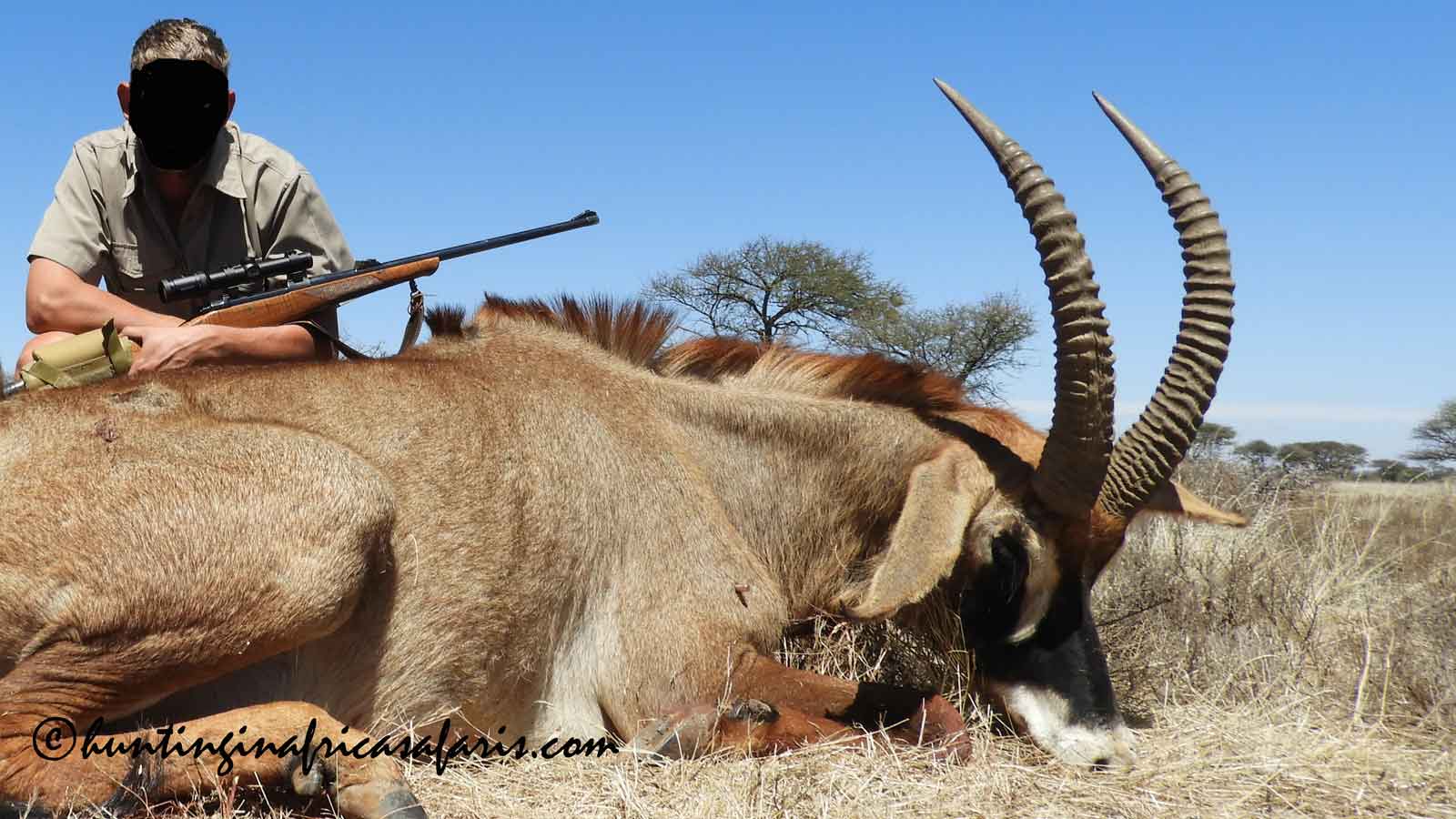
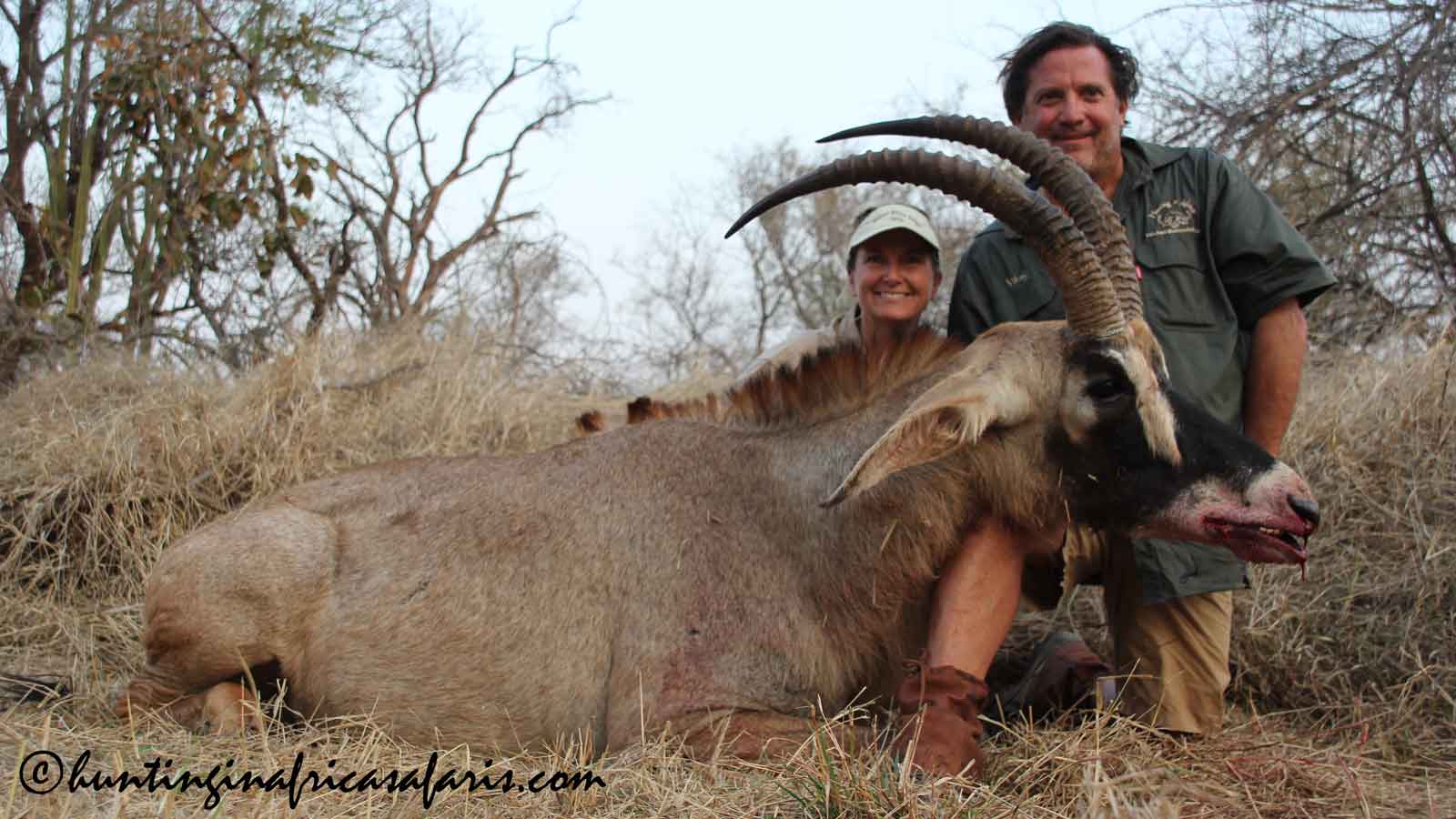
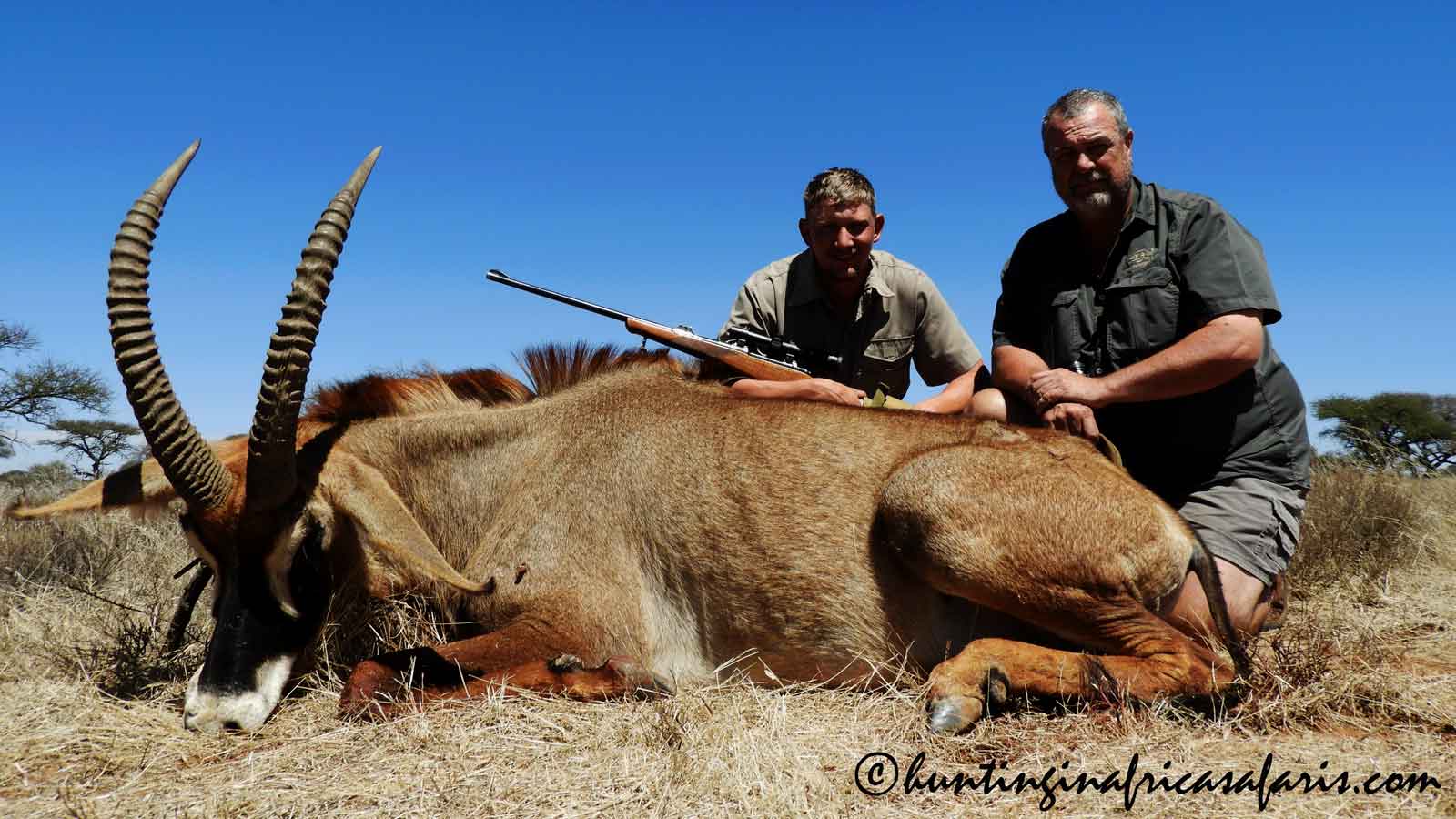
6. Southern roan antelope hunter gallery: A testament to the hunt
The Southern roan antelope (Hippotragus equinus) represents an elite, high-value acquisition that demands substantial investment and field dedication from international sportsmen. This curated archive showcases the outstanding trophy quality, heavy horn mass, and distinct facial masking characteristic of mature bulls harvested across our regulated hunting concessions. Each archival entry records a successful tracking partnership between the hunter, our professional staff, and our tracking teams, navigating the dense thornveld and open savannas of South Africa to select a mature, post-reproductive specimen.
These documented field successes are the direct result of systematic scouting, intense physical persistence, and a strict commitment to the ethical, fair-chase hunting principles that define African Bushbuck Adventures. Whether your hunting objective is a standalone roan bull or a vital addition to a multi-species plains game portfolio, these entries confirm that disciplined tracking and ballistic precision deliver clean terminal performance.

Frequently Asked Questions about Roan antelope hunting
What is the best caliber for hunting roan?
While the .270 or .30-06 springfield are sufficient, the roan is a large, tough animal. a .300 magnum or even a .375 h&h is recommended to ensure a clean harvest.
How do you distinguish a trophy roan bull?
Look for a heavy, thick-set neck and deep chest. horns should show significant mass at the base and carry that thickness through the curve; length is secondary to overall mass and age.
What is the typical shooting distance?
Most shots are taken from steady sticks at distances between 120 and 220 yards, depending on the thickness of the cover and the wariness of the herd.
Are roan antelope aggressive?
Yes, roan are known for their courage and can be very aggressive if wounded or cornered. they have been known to stand their ground against even large predators like lions.
What is the best time of year to hunt roan?
The cooler, drier months from april to october are ideal. the thinning vegetation improves visibility, and the lower temperatures make for a more comfortable stalk.
Do females have horns?
Yes, both bulls and cows carry backward-curved horns. however, the horns of the bull are notably thicker and more heavily ridged than those of the cow.
Why is the roan called the "bastergemsbok" in afrikaans?
The name refers to their distinctive black-and-white facial markings, which are reminiscent of a gemsbok, though they are much larger and built more like a horse. The backward curving horns reminded of those of the sable. Although not true, a combination of the two would then culminate in a cross-breed between a gemsbok / oryx and a sable antelope.
Services
Contact
hunt@huntinginafricasafaris.com
+27 82 824 7681
on Whatsapp and Telegram
Hours
Mondays from: 06:00 - 20:00 (6 am - 8 pm)
Tuesday - Saturday from: 06:00 - 20:00 (6 am - 8 pm)
Sunday: Closed unless we are hunting.