
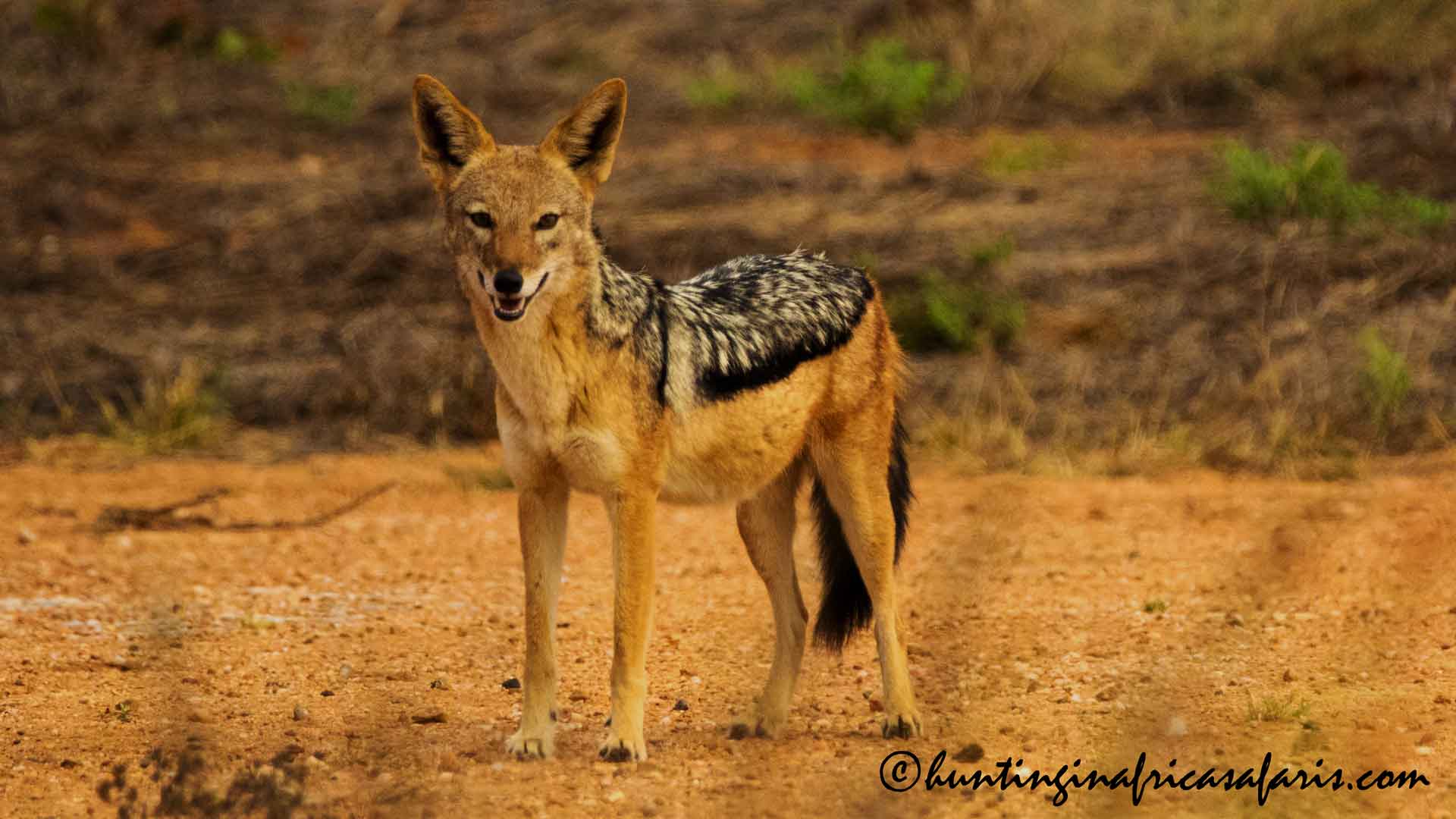
Black-backed Jackal hunting South Africa
Black-backed Jackal - The predator challenge
Tactical calling, The African Coyote
Hunting the black-backed jackal (Lupulella mesomelas) in South Africa offers a high-stakes tactical experience that rivals the most intense predator hunting in North America. Often termed The African Coyote, this wily and elusive predator demands patience, sharp eyes, and rapid decision-making. At African Bushbuck Adventures, we elevate the jackal from a common nuisance to a premier trophy pursuit, treating every hunt as a serious, management-based challenge.
We utilize sophisticated electronic calling and traditional predator calling techniques to pull these intelligent scavengers into range. For those seeking an adrenaline-fueled experience, our night hunts (where legally permitted) provide an intense look into the world of the African bushveld after dark. Whether you are adding a black-backed jackal to your plains game safari or planning a standalone predator expedition, securing a Silverback is an absolute mark of a seasoned hunter’s skill.
Caracal - The secretive trophy
African Lynx - and opportunistic hunting logistics.
The caracal (Caracal caracal), often known as the African Lynx or Rooikat, is one of the most coveted feline trophies in the southern African bushveld.
At African Bushbuck Adventures, we can incorporate caracal hunting as an opportunistic highlight to your plains game safari. We recommend notifying your professional hunter upon booking so our team can remain vigilant for tracks and sightings throughout your stay. Whether spotted while out on a general stalk, flushed from cover, or observed during a night drive, the opportunity to harvest a mature caracal is a unique experience. Given their status, we assist with all necessary provincial permitting to ensure your trophy is ethically and legally secured.
Black-backed jackal hunting prices and trophy fees 2026
At African Bushbuck Adventures, we believe in complete financial transparency. We have structured our predator hunting fees to be straightforward, allowing you to easily incorporate a trophy pursuit into your safari package. Whether you are seeking a dedicated night-calling session or a trophy of opportunity during your plains game hunt, the following rates apply for the 2026 season.
Why add a jackal to your safari
Predator management is an essential component of our conservation efforts on Farm Zwartkoppies. By adding a black-backed jackal to your safari, you are not only securing a challenging trophy but also directly contributing to the balance of our local ecosystem. Because these predators are already present on our concessions, adding this hunt incurs no additional daily rate overhead—it is the most cost-effective and efficient way to expand your trophy collection.
Black-backed jackal hunting pricing and inclusions
To ensure complete transparency, we have structured our predator hunting fees to be straightforward and accessible. Whether you are seeking a dedicated night-calling session or a trophy of opportunity, the following rates apply for the 2026 season.
| 2026 Black-backed jackal hunting costs | |
|---|---|
| Black-backed jackal trophy fee | $300 USD |
| Night hunt vehicle fee | $150 USD (per vehicle) |
| 15% VAT on daily rates | Included in all daily rate packages |
| Professional hunter & tracker | Included in daily rate services |
| Field preparation | Included: Expert skinning and salting of pelt/trophy |
| Wounded or lost animal | Full trophy fee applies |
Important safari pricing transparency
At African Bushbuck Adventures, we prioritize straightforward, clear communication regarding our safari costs. We believe your focus should remain on the hunt, not on deciphering complex invoices. The following details clarify how we manage specific charges and value-added inclusions for your predator hunt.
-
Vehicle fee: The night hunt fee of $150 is charged per vehicle, not per hunter. This makes it an ideal and cost-effective add-on for a father and son or small groups sharing a 4x4. This fee covers the specialized use of equipment, fuel, and the overtime for our field staff.
-
All-inclusive rates: To simplify your planning, all daily rates provided by African Bushbuck Adventures include the 15% South African Value Added Tax (VAT). There are no hidden tax surprises at the end of your safari.
-
Trophy of opportunity: If a jackal is taken during the course of a standard daylight plains game hunt without a dedicated calling session, the $150 vehicle fee is waived; only the $300 trophy fee will apply.

Recommended jackal calibers and predator management
While we often joke that the best caliber for a jackal is the one you have in your hand, selecting the right tool for predator calling ensures your rooijakkals experience is as effective as it is exciting. In South Africa, managing these intelligent predators is a common necessity for our local farmers, and the sheer variety of calibers used—from small-bore varmint rounds to standard plains game rifles—speaks to the species' status as a challenging target.
Primary advice
Because jackal hunting is primarily experience-oriented, shot placement and fieldcraft will always outweigh your choice of ballistics. Whether you are specifically targeting them over an electronic caller during a night hunt or happen upon one while stalking plains game, your setup should be reliable and familiar.
| Predator caliber compatibility reference | |
|---|---|
| Dedicated varmint calibers | .204 Ruger, .22 Hornet, .22-250 Remington, .223 Remington, .220 Swift |
| Light-medium game calibers | 6mm Creedmoor, .243 Winchester, 6.5mm Creedmoor, 6.5mm PRC, .25-06 Remington |
| Versatile plains game calibers | .270 Winchester, 7mm Remington Magnum, .308 Winchester, .30-06 Springfield, .300 Win Mag |
Jackal hunting calibers
While technical specs and ballistic tables provide a solid foundation, 29 years as a Professional Hunter in Southern Africa has taught me one overriding rule when a jackal presents a shot: Get it!
In the heat of the moment, the "perfect" caliber is secondary to a steady rest and a confident trigger pull. The wily nature of the black-backed jackal doesn't often grant a second chance, so whether you are holding a specialized varmint rig or a heavy plains game rifle, the priority is to capitalize on the opportunity.
Field-tested expertise
The caliber advice provided here isn't just theory; it is the result of nearly three decades of professional hunting experience across both dangerous game and plains game safaris. These recommendations have been field-tested under every conceivable condition—from the freezing winter nights of the Highveld to the thick bush of the North West.
To supplement our first-hand experience and provide you with the most scientifically sound ballistics data, we have consulted the industry's most respected authorities:
Follow this link for a comprehensive caliber information review
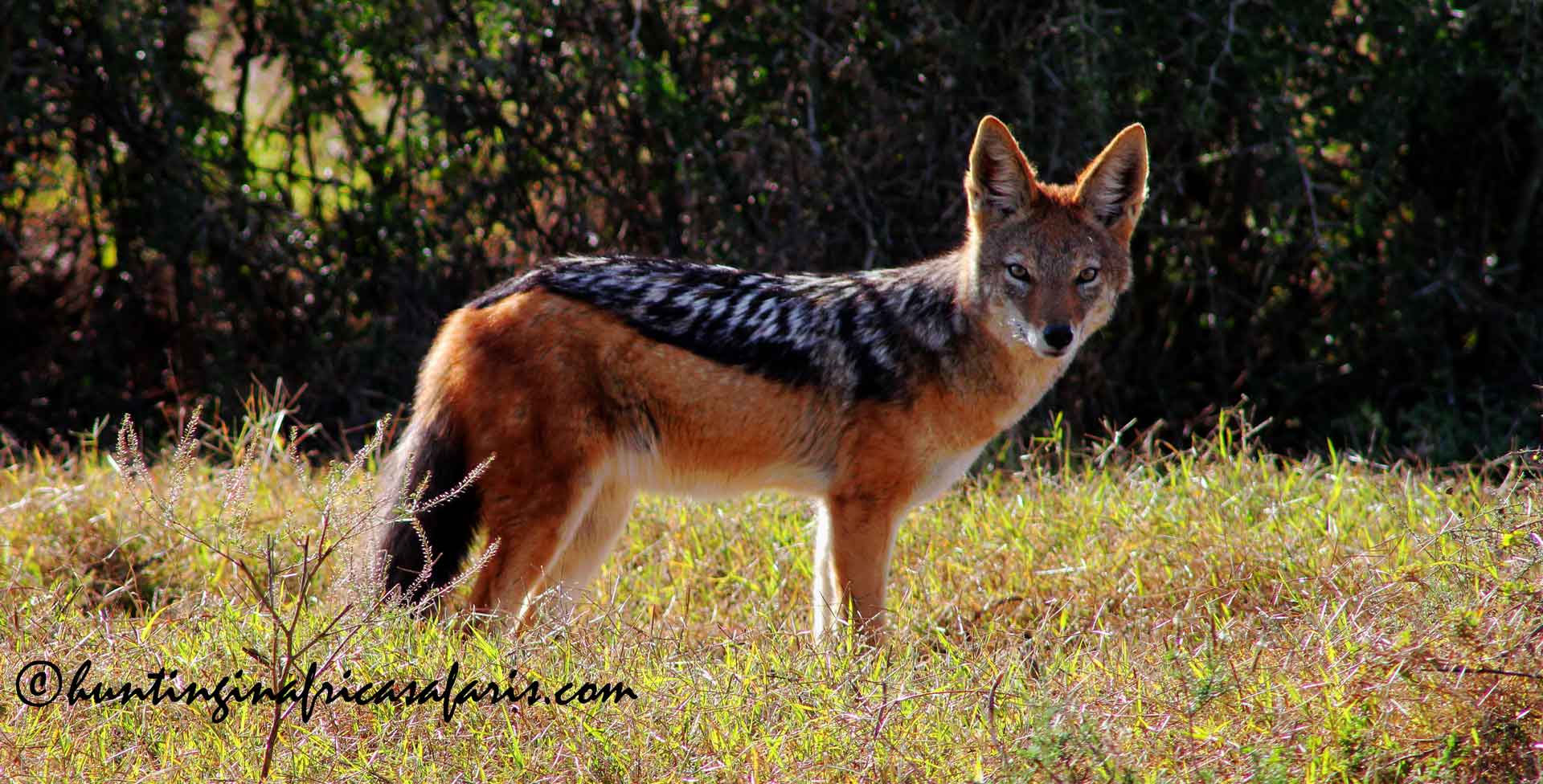
Shot placement: Black-backed jackal (Lupulella mesomelas)
Precision is the priority when dealing with the African Coyote. Due to their small target area and incredible agility, understanding their internal anatomy—specifically the position of the heart and lungs—is the difference between a clean harvest and a lost animal.
Professional hunter’s field notes
-
The Low-Third Rule: Like most African game, the vitals of a jackal sit further forward and lower than many hunters expect. Aiming mid-body often results in a gut shot, which is disastrous for tracking a predator at night.
-
Wounded Animal Recovery: Jackals are notoriously hardy. A wounded jackal will immediately head for the thickest cover or the nearest burrow. Always shoot until the movement stops to ensure the animal is anchored.
-
Night Hunting Variables: When hunting under spotlights, the light can distort your depth perception. Wait for the jackal to stand broadside or quartering away before squeezing the trigger to give yourself the largest possible margin for error.
Species biology and conservation (Lupulella mesomelas)
Understanding the biology of the black-backed jackal is essential for any hunter looking to outsmart this clever predator. Known scientifically as Lupulella mesomelas, this species is one of the oldest known members of the dog family, with fossil records dating back millions of years.
Taxonomy and classification
The black-backed jackal is distinct from other African canids. While it shares territory with the side-striped jackal, the black-backed variety is generally more aggressive and bold.
Physical characteristics and biology
The most striking feature of this species is the mantle of black hair intermingled with silvery-grey scales that runs from the neck to the tail. This saddle or silver back is what gives the trophy its prestigious look.
-
Size and Weight: Adults typically stand about 15 to 19 inches at the shoulder and weigh between 15 and 30 pounds. Rams are generally larger and more robust than ewes.
-
Senses: Their hearing is exceptionally acute, aided by large, pointed ears that can pick up the slightest rustle of a rodent or the distant call of a predator. Their sense of smell is equally developed, making them difficult to approach downwind.
-
Dietary Habits: As opportunistic omnivores, they hunt everything from insects and rodents to young antelope. They are also notorious scavengers, often seen following lions or hyenas to wait for the remains of a kill.
Behavior and social structure
The jackal is a highly intelligent and vocal animal. In the quiet of the African night, their eerie, high-pitched yapping is a signature sound of the bush.
Conservation and management
The black-backed jackal is classified as Least Concern by the IUCN, largely due to its incredible adaptability. In South Africa, they are often managed as a problem animal because of their impact on livestock and young plains game.
Ethical hunting plays a vital role in keeping these populations in check. Without controlled management, jackal numbers can explode, leading to a significant imbalance in local ecosystems and devastating losses for farmers. By hunting the jackal, you are contributing to a necessary management plan that protects the biodiversity of the region.
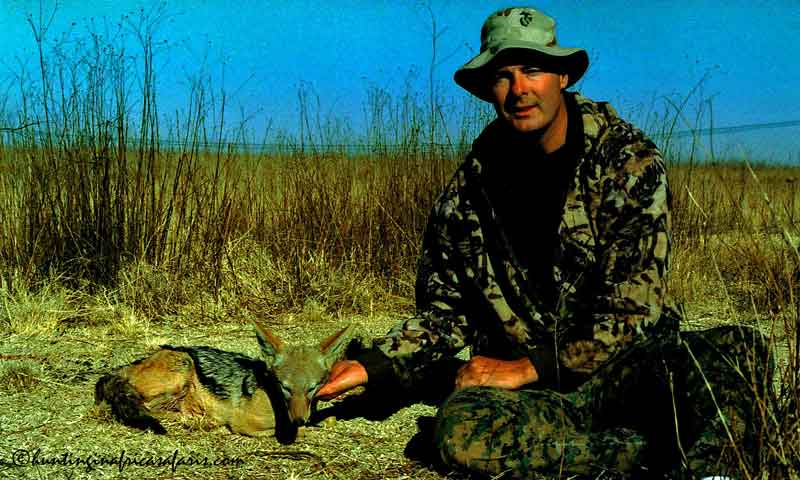
Black-backed jackal hunting gallery: The Silverback trophy
Securing a black-backed jackal is a testament to a hunter’s patience and marksmanship. Whether taken through a meticulously planned predator calling session or as a high-stakes trophy of opportunity while tracking plains game, the jackal represents one of Africa’s most wily and respected adversaries. The striking contrast of the Silverback mantle makes for a truly unique addition to any trophy room, capturing a raw element of the African night.
Below is a selection of successful harvests from our recent safaris. While we treat the jackal as a vital part of our conservation and farm management strategy, the experience of outsmarting this African Coyote remains a highlight for many of our visiting hunters.


Frequently asked questions: Jackal hunting in South Africa
The black-backed jackal is a unique predator that often requires different tactics than standard plains game. Below are the most common questions from our clients regarding the pursuit of this Silverback trophy.
Is jackal hunting primarily done at night?
While jackal are opportunistic during the day, the most successful dedicated hunts occur at night using predator calling and spotlights.
Do I need a special permit for jackal?
In most provinces, jackal are managed as a damage-causing species. We handle all necessary paperwork as part of your safari package.
Can I hunt jackal while on a plains game safari?
Absolutely. We encourage taking a jackal whenever the opportunity arises to assist in our wildlife management efforts.
What is the best time of year for jackal?
| Jackal can be hunted year-round, but the winter months (May–August) produce the thickest, highest-quality "Silverback" pelts. |
Services
Contact
hunt@huntinginafricasafaris.com
+27 82 824 7681
on Whatsapp and Telegram
Hours
Mondays from: 06:00 - 20:00 (6 am - 8 pm)
Tuesday - Saturday from: 06:00 - 20:00 (6 am - 8 pm)
Sunday: Closed unless we are hunting.