Waterbuck hunting South Africa: 2026 Trophy fees, Caliber recommendations, and Tactics
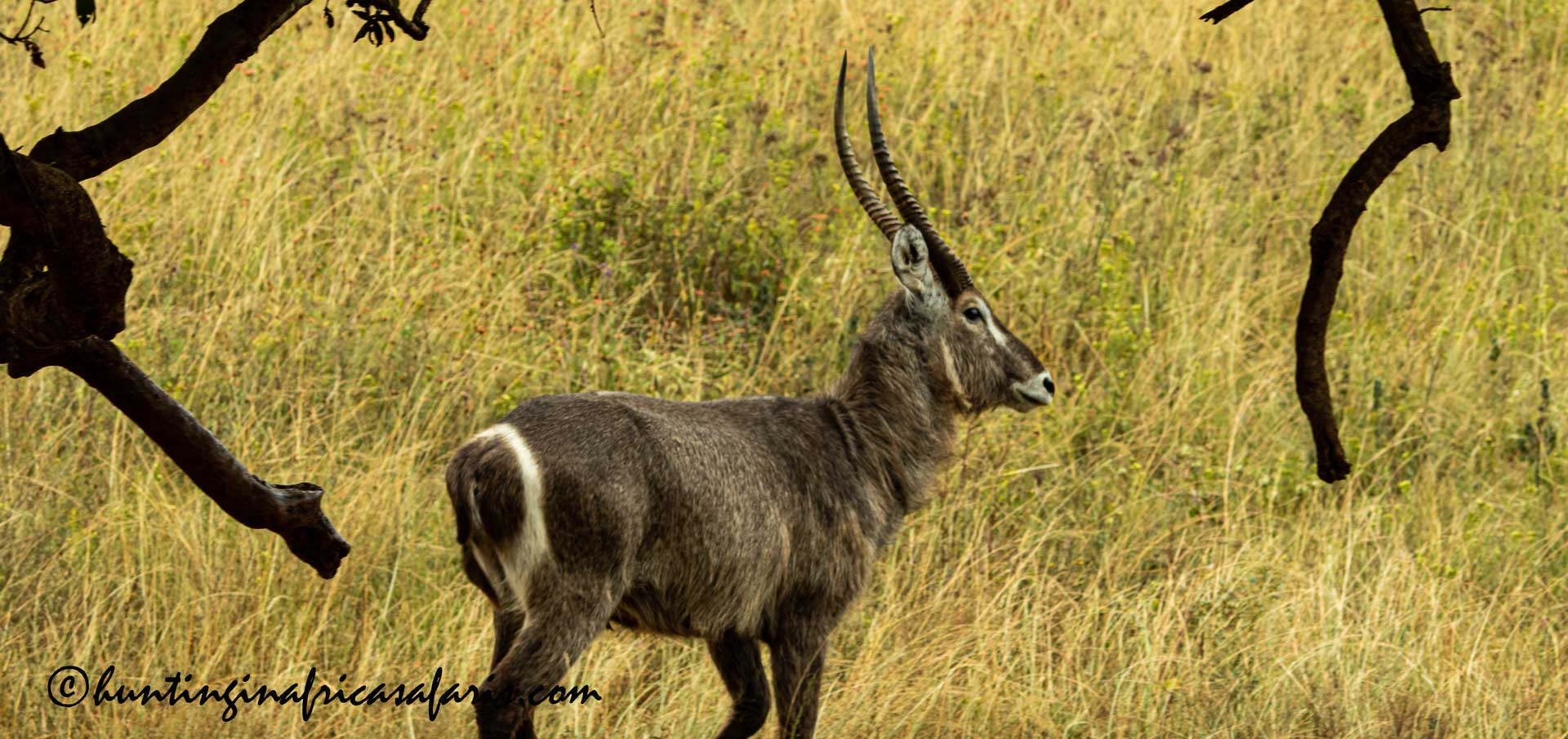
Planning a Waterbuck hunting safari in South Africa for the 2026 season requires a strategic approach to both equipment and tactics to successfully harvest a trophy bull. Known for their resilience and distinctive white-ringed rump, the Waterbuck (Kobus ellipsiprymnus) is a premier plains game species that demands respect from every hunter. Because these animals are exceptionally tough, choosing the best caliber for Waterbuck hunting—such as the .30-06 or .300 Magnum loaded with premium bonded or monolithic bullets—is vital for an ethical, one-shot harvest.
Whether you are looking for current Waterbuck trophy fee South Africa 2026 information, detailed Waterbuck shot placement diagrams, or all-inclusive plains game hunting packages that feature this species, preparation is key. Understanding the biology and behavior of these water-dependent antelope is the first step toward a successful walk and stalk Waterbuck hunt in the dense riverine areas of our North West and Limpopo concessions. From learning how to judge a mature Waterbuck bull to mastering the best Waterbuck hunting methods, we provide the expertise needed to secure your trophy.
Notes from the field journal: Waterbuck are rarely far from water and possess a unique, musky scent that can betray their presence before they are seen. When pursuing them, remember that they are remarkably durable; always aim for the high heart-lung area to anchor them instantly and prevent a difficult recovery in thick cover.
2. Waterbuck hunting prices and trophy fees 2026
Evaluating a waterbuck (Kobus ellipsiprymnus) harvest requires a precise operational breakdown of trophy tier metrics, concession management allocations, and strict field recovery protocols. To maintain absolute transparency for international safari budgeting, our 2026 fee structure is clearly defined below. These established rates reflect the selective hunting pressure, intensive habitat maintenance, and long-term population management required to consistently yield mature, heavy-horned bulls across our South African tracking concessions.
2.1 Waterbuck pricing and trophy fee matrix
| Waterbuck trophy fees and recovery parameters | |
|---|---|
| Waterbuck bull trophy fee | $2,950 |
| Wounded and unrecovered game | 100% of the base trophy fee |
Professional Hunter’s field recovery note: In accordance with ethical fair-chase hunting standards and regional outfitters' statutory frameworks, any animal struck by a projectile where drawing blood is verified by the tracking team is classified as a harvest. The full trophy fee remains payable on wounded and unrecovered specimens. In the event that a wounded bull cannot be recovered after an exhaustive tracking deployment, any subsequent allocation for a secondary replacement bull must be authorized under a completely separate concession quota.
2.2 What your waterbuck trophy fee includes
To ensure absolute operational clarity for safari budgeting, our established trophy fees are structured on a comprehensive base model. The base fee allocated for a waterbuck (Kobus ellipsiprymnus) harvest covers all essential back-end concession administration, raw field processing, and statutory compliance parameters required to legally secure and clear your specimen for international transit.
| Trophy fee inclusive services and field processing | |
|---|---|
| Concession hunting rights | Grants formal allocation and quota clearance to harvest one mature waterbuck bull within our regulated tracking concessions. |
| Raw field caping | Complete skinning and raw caping of the animal by our trained camp staff, tailored precisely for either a full mount, shoulder mount, or flat skin presentation. |
| Salting and preservation | Initial preparation, comprehensive salting, and secure storage of the cape and skull horn assembly within our monitored field slaughter facilities. |
| Statutory documentation | Generation of all necessary local conservation permits, land-owner hand-over notes, and basic transport documentation required for taxidermy transfer. |
| Local taxidermy transit | Secure overland delivery of your preserved raw trophies from our field camp directly to our designated regional taxidermy studio or export dip-and-pack facility. |
Professional Hunter’s logistics note: Please note that individual species trophy fees specifically exclude daily safari operational rates (unless pre-booked within an all-inclusive package), final taxidermy processing costs, dip-and-pack sterilization fees, and international shipping freight charges. All raw trophies are meticulously cataloged alongside your personal hunting registry numbers before being handed over to the export broker.
3. Best calibers for hunting waterbuck antelope
Selecting an optimal firearm configuration for a waterbuck (Kobus ellipsiprymnus) safari requires a disciplined evaluation of the species' immense physical resilience, dense skeletal framework, and heavy muscle distribution. A mature adult bull is a large, exceptionally robust animal frequently exceeding 500 lbs (227 kg) in total mass, carrying thick leather shields across the neck and shoulder regions. Ethical fair-chase standards demand centerfire setups capable of delivering exceptional cross-sectional energy and deep, reliable terminal penetration through dense bone to ensure a rapid, humane harvest within the vital thoracic cavity.
When configuring a rifle for the dense, complex environments of the African bushveld, mechanical precision, high sectional density, and premium projectile construction are far more critical to field success than raw muzzle velocity. Utilizing light-jacketed, fast-fragmenting bullets at extreme velocities is a severe operational error that often results in premature surface expansion and inadequate penetration. Instead, clean field recoveries require medium-bore or large-bore setups shooting heavy-for-caliber, premium controlled-expansion or monolithic solid projectiles engineered to track perfectly straight through major structural joints without fracturing.
2. Recommended calibers for Waterbuck (Kobus ellipsiprymnus)
The Waterbuck is a large, robust animal with heavy musculature and dense bone structure, often exceeding 500 lbs (227 kg). Ethical hunting demands calibers capable of deep, reliable penetration to ensure a swift, humane harvest. In the African bushveld, precision and bullet construction are far more critical than raw muzzle velocity.
| Waterbuck caliber and projectile load recommendations | |
|---|---|
| .308 Winchester (165+ grains) | Represents the minimum ethical centerfire baseline. This cartridge setup mandates the use of premium, heavy-for-caliber bonded or structured monolithic projectiles to achieve sufficient sectional density and ensure deep penetration into the thoracic vitals. |
| .30-06 Springfield (180 grains) | An excellent, highly versatile all-around cartridge selection. This configuration offers superior downrange kinetic energy and higher velocity profiles over the .308 Winchester, delivering reliable, complete cross-sectional penetration through the dense physical frame of mature bulls. |
| .300 Magnum (WSM/WM) (180 grains) | A premier performance choice for waterbuck tracking. The elevated magnum energy profiles ensure the chosen projectile retains optimal velocity and striking power across extended distances, guaranteeing straight, deep penetration at varying field ranges. |
| .375 H&H Magnum (300 grains) | The definitive heavy plains game configuration for maximum field reliability. Firing heavy 300-grain premium bonded or solid projectiles offers the largest, most structurally forgiving penetration path through dense shoulder joints and heavy muscle layers for this class of animal. |
4. Technical ballistics and hunting principles for waterbuck
Successfully harvesting a mature waterbuck (Kobus ellipsiprymnus) requires a disciplined adherence to fundamental terminal ballistics and local terrain adaptations. Raw kinetic energy is secondary to mechanical precision and controlled expansion when operating within complex bushveld environments.
-
Penetration dynamics: Clean vital entry is an absolute requirement when facing the massive muscle volume and thick skin shields of an adult bull. This operational parameter requires the exclusive deployment of premium-grade ammunition, utilizing advanced bonded-core or structured monolithic projectiles to prevent premature fragmentation. Standard soft-jacketed factory loads are highly inadequate and introduce a significant risk of surface failure.
-
Precision over raw velocity: Flawless shot placement remains the primary factor for securing a rapid, humane harvest, outranking raw muzzle velocity or excessive cartridge power. A sportsman must prioritize a rifle configuration that they can discharge with consistent accuracy and total physical comfort under field conditions.
-
Open savanna tracking: When navigating open plains or wide valley clearings, tracking teams prioritize flat-shooting magnum cartridges to maintain tight trajectories and counter potential crosswind drift across extended distances.
-
Dense bushveld conditions: When tracking through thick woodland corridors or riverine cover, strategies shift toward heavy, medium-bore or large-bore cartridge setups that deliver massive close-range stopping power and deep, uncompromised penetration from varying shooting angles.
5. Expert waterbuck shot placement: Broadside vitals
The waterbuck (Kobus ellipsiprymnus) is a large, rugged animal possessing distinct anatomical traits that tracking teams must consider before authorizing a shot. Its heart and lung cavity is positioned slightly further forward than many other plains game species. Combined with a thick, shaggy hide and dense bone structure, successful field recovery requires a heavy caliber paired with precise shot placement to anchor the bull immediately.
| Anatomical aim points and targeting strategies | |
|---|---|
| Full broadside profile | Center of the shoulder assembly. Aim directly at the primary shoulder mass, tracking approximately one-third up from the bottom chest line to disrupt the upper heart and primary vascular network. |
| Behind shoulder profile | Thoracic heart-lung vitals. Aim exactly one-third up the total body depth, placing the projectile tightly behind the rear crease of the front leg to puncture both lungs cleanly. |
5.1 Tactical considerations for the hunter
-
Skeletal structure disruption: On a full broadside presentation, targeting the heavy front bone structure delivers a major wound channel. This placement effectively anchors the animal, preventing a heavy bull from retreating into nearly impenetrable riverine thickets or reed beds.
-
The thoracic lung cavity: Because the respiratory vitals are massive, a shot placed one-third to one-half up the body profile just behind the shoulder crease remains highly effective. This line targets the center of the lungs and avoids the heaviest bone shields while ensuring a quick, humane collapse.
-
Trophy cape preservation: Both the direct shoulder and rear heart-lung placement styles are ideal for professional taxidermy processing. They completely avoid structural damage to the neck, throat, and facial areas, ensuring your cape remains in pristine condition for a mount.
-
Cross-sectional depth: Always calculate that a waterbuck bull carries immense body depth and wide ribs. Your projectile must be a premium bonded-core or solid monolithic design to ensure it maintains the structural weight and forward momentum required to reach the far-side vital wall.
Professional hunter’s field note: A wounded waterbuck will almost always break toward the thickest available riverine cover or the nearest deep pool of water. Absolute precision on the initial shot configuration is the operational difference between an immediate, clean recovery and a long, difficult tracking sequence through dense bushveld terrain.

6. Waterbuck trophy gallery: Mature bulls harvested in South Africa
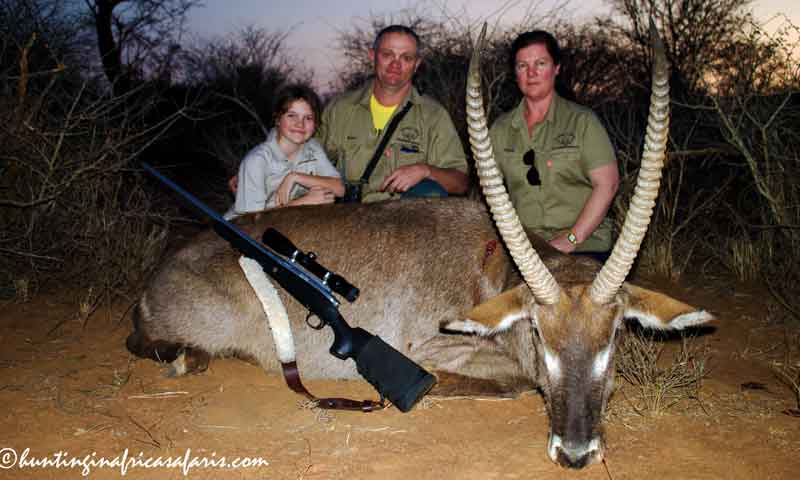
Review our archived field portfolio documenting mature waterbuck (Kobus ellipsiprymnus) bulls harvested by clients across our South African concessions. These photographic records demonstrate the specific horn symmetry, deep horn ridging, and structural mass that define mature, post-reproductive specimens select-harvested under our active management frameworks. Our operations emphasize low-impact, sustainable harvesting practices designed to maintain optimal population dynamics while consistently producing high-tier specimens for international sportsmen.
6.1 Key parameters governing trophy quality and field selection
-
Regulated population genetics: Tracking operations are conducted exclusively within concessions managed for advanced age structures, ensuring that target bulls have surpassed their peak breeding years and fully expressed their horn growth potential.
-
Anatomical field evaluation: Senior tracking teams utilize decades of regional field experience to judge horn length, base circumference, and ridge definition downrange, ensuring only mature bulls are selected before authorizing a shot configuration.
-
Concession terrain diversity: Our archival records document successful stalks executed across highly varied environments, ranging from dense riverine thickets and reed beds to wide, open floodplains where these resilient antelope congregate.
-
Field record preservation: Tracking teams prioritize high-quality field documentation and professional lighting composition to accurately record the physical legacy and anatomical scale of your harvest.
| Trophy standards and management criteria | |
|---|---|
| Trophy characteristics | Post-reproductive bulls displaying deeply ridged, forward-sweeping horns with established structural symmetry. |
| Harvesting ethics | Strict adherence to verified fair-chase tracking parameters and regional conservation quota frameworks. |




7. Species biology and conservation (Kobus ellipsiprymnus)
The waterbuck (Kobus ellipsiprymnus) represents a vital indicator species within riparian ecosystems across South Africa. Developing an accurate understanding of their physical mass, localized habitat dependencies, and territorial water requirements is essential for executing a successful field stalk. Because these antelope maintain a strict physiological dependency on permanent surface water, tracking teams utilize known riverine corridors, reed beds, and floodplains to map herd movements and isolate mature bulls.
| Waterbuck biological specifications | |
|---|---|
| Scientific designation | Kobus ellipsiprymnus |
| Common designation | Waterbuck |
| Physical body mass | Adult bulls range between 180 kg and 270 kg (approx. 400 to 600 lbs), carrying heavy muscle mass over the forequarters. |
| Concession habitat | Primarily confined to riverine thickets, reed beds, marshes, and low-lying alluvial floodplains. |
| Distinguishing features | Coarse, shaggy, oil-secreting coat with a prominent white elliptical ring encircling the rump area. |
| Primary behavioral trait | Highly water-dependent, remaining alert with acute auditory and olfactory senses to detect predators within thick cover. |
Services
Contact
hunt@huntinginafricasafaris.com
+27 82 824 7681
on Whatsapp and Telegram
Hours
Mondays from: 06:00 - 20:00 (6 am - 8 pm)
Tuesday - Saturday from: 06:00 - 20:00 (6 am - 8 pm)
Sunday: Closed unless we are hunting.