Free-Range Elephant Hunting in South Africa | Associated Parks & Kruger Border
Welcome to the ultimate guide for authentic, free-range elephant hunting safaris in Africa. Based across massive, unfenced concessions in South Africa’s premier Associated Parks bordering the Kruger National Park, this page provides transparent information to help you plan your hunt, including current pricing, strict permit requirements, and the legal calibers needed for an ethical harvest.
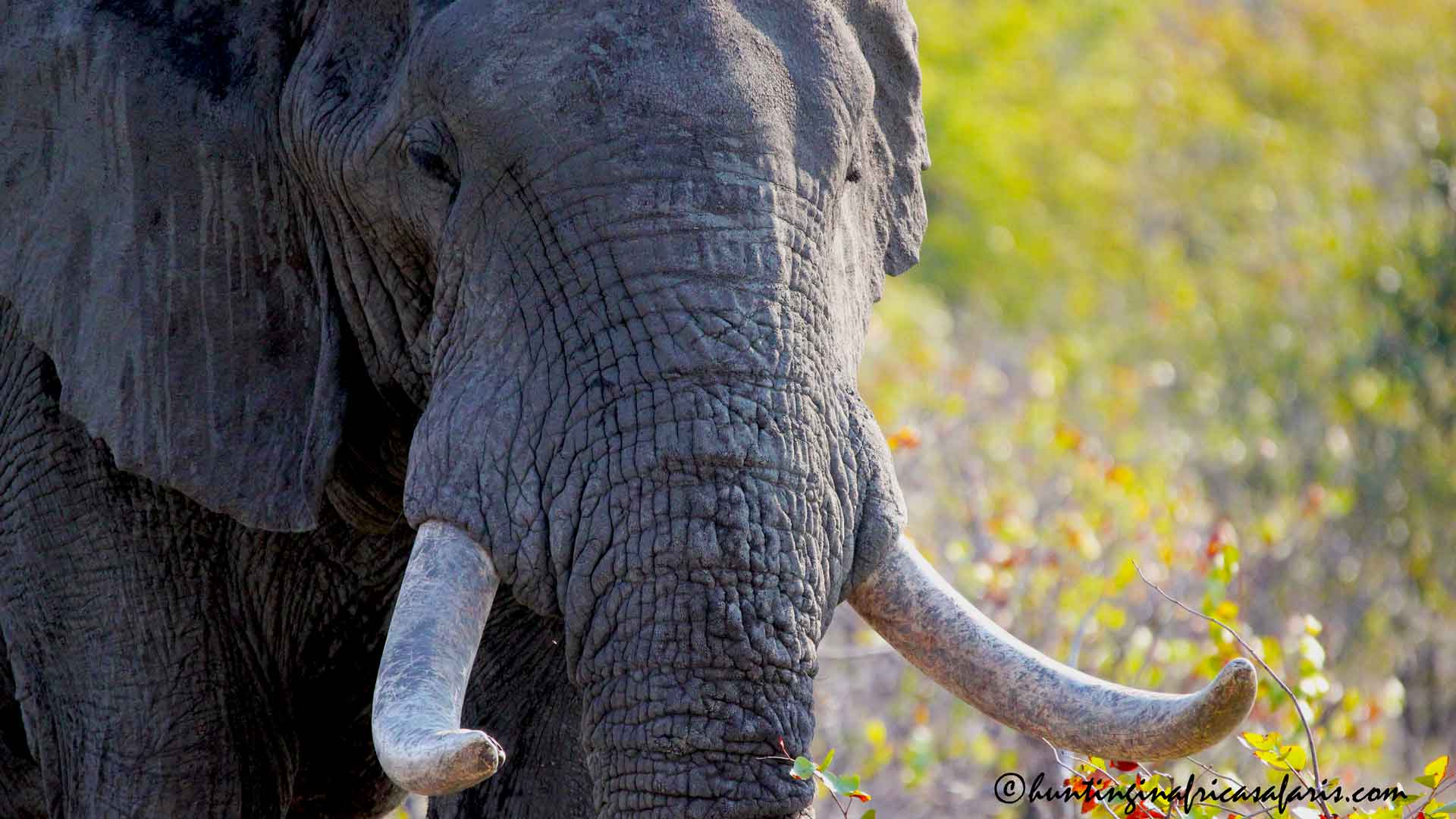
Hunting the African elephant (Loxodonta africana) in these wild, unfenced systems is the pinnacle of dangerous game hunting. It demands exceptional skill, tracking expertise, and absolute nerve.
1. Why Hunt Free-Range Elephants in South Africa's Associated Parks?
Unlike small enclosed reserves, hunting within the Greater Kruger and Associated Parks ecosystem offers a true fair-chase experience:
- Unfenced Ecosystem: Millions of acres of combined wild habitat where elephants roam completely free across open borders.
- High Population Density: Encounter dozens of breeding herds and mature bachelor groups daily during your pursuit.
- True Walk-and-Stalk: Tracking massive trophy bulls on foot through dense Mopane bushveld and riverine forests.
2. Elephant Hunting Prices, Trophy Fees & 50 lb+ Tuskers
We offer a transparent fee structure for free-range elephant bulls, ranging from standard management tags to elite, heavy-ivory trophy bulls for discerning hunters.
| Elephant hunting prices & trophy tiers South Africa | |
|---|---|
| South Africa Free-Range Bull | $35,000 – $45,000+ (Size dependent / All-inclusive of daily rates) |
| Standard Trophy Bull (35 – 40 lbs) | $40,000+ (All-inclusive package covering prime mature bulls) |
| Elite 50 lb+ Big Tusker | Price On Application (POA): Reserved for premium, exceptional old-age bulls carrying 50 lb to 55+ lbs per side. Premium investment for elite collectors. |
| Dangerous Game Daily Rates (1x1) | $850 – $1,500 per day |
| Observer Daily Rate | $250 – $300 per day |
3. Legal Import Status, Tags & CITES Compliance
South Africa remains a primary, legally regulated destination for elephant hunting and international import (including the USA via USFWS).
- Tags & Quotas: Strictly controlled CITES permits and management tags, spanning standard 35–40 lb bulls up to restricted big tusker permits for mature bulls carrying ivory between 50 lbs and 55 lbs per side.
- Permit Assistance: Our team handles all documentation, TOPS permits, and export protocols to ensure your trophies clear customs smoothly.
4. Recommended Elephant Hunting Calibers & Ammunition
For dangerous game, we advocate the Philosophy of Over-Penetration. Monometal solid bullets are mandatory.
| Recommended elephant hunting calibers | |
|---|---|
| Legal Minimum (.375 H&H Magnum) | Requires premium 300-grain monometal solids; ideal for precise brain shots by experienced marksmen. |
| Highly Recommended (.416 Rigby) | The versatile classic balancing recoil, penetration, and terminal energy with 400-grain solids. |
| The Gold Standard (.458 Lott / .470 Nitro Express) | Heavy 500-grain solid ammunition providing maximum margin of error on close-quarter charges. |
5. Optimal Elephant Hunting Season
The dry winter months—from May to October (with peak tracking in August through October)—offer the best conditions. Extreme water scarcity makes mature bulls highly predictable as they congregate near perennial water sources and rivers.
6. Excluded Costs & Final Investment
The trophy fee covers your core safari, but you should budget separately for:
- Trophy Export & Processing: Dip & pack, crating, veterinary documentation, and freight shipping.
- Logistics: International airfare, SAPS 520 rifle import permits, and extra accommodation.
- Taxidermy & Gratuities: Professional taxidermy mounting and customary tips for your PH, trackers, skinners, and camp crew.
7. Shot Placement: African Elephant (Loxodonta africana)
Elephant hunting demands the utmost precision. Monometal solid ammunition is mandatory due to the massive bone and tissue structure. The details below outline optimal target zones during your pursuit.
| African elephant shot placement guide | |
|---|---|
| Broadside Shot Placement | High Heart/Lung: Aim for the heart/lung area by sighting up the back edge of the front leg, a hand's width above the armpit crease, and a hand's width in front of that point. Offers a safer, larger target area. |
| Brain Shot Placement (Side) | Instant Knockdown: Aim approximately three fingers to one hand's width in front of the ear hole. The brain is surprisingly small and located at the bottom-back of the skull. |
| Primary Vital Areas | Brain (for immediate incapacitation and safety) or Heart/Lungs (a safer, larger target area). |
| Key Hunting Note | The frontal brain shot angle is highly complex and changes drastically depending on the elephant's head position and your distance. Your Professional Hunter will guide every critical shot. |
Follow this link to learn more about African hunting calibers and ballistics
Visual Reference: Elephant Shot Placement Diagram
Review the hand-drawn anatomical reference below to visualize skeletal landmarks and exact vital zones for a safe, ethical harvest.

Largest elephant tusks ever recorded
This section celebrates the incredible history and scale of the largest African bull elephants (Loxodonta africana) ever recorded, highlighting the ultimate aspiration of the serious hunter. The weight of an elephant’s tusks is influenced by genetics, diet, and age, often only reaching their true potential late in the bull’s life.
| Elephant | Details |
| The Crone elephant | 450 lbs (225 lbs per side) |
| Location & year | Kilimanjaro, Tanzania (1898) |
| Notes | The heaviest set of tusks ever recorded. The ivory was too heavy to be moved by a single person. |
| Sauer’s bull | 440 lbs (220 lbs per side) |
| Location & year | Mount Kenya (1899) |
| Notes | Shot by the famous professional hunter J.J. Karamoja Bell; a benchmark for the Golden Age of Safari. |
| Yankele bull | 354 lbs (177 lbs per side) |
| Location & year | Angola (1970) |
| Notes | The heaviest tusks taken in the latter half of the 20th century, cementing Angola’s reputation for massive tuskers. |
| Mandevu | 232 lbs (116 lbs per side) |
| Location & year | Selous Game Reserve, Tanzania (1993) |
| Notes | One of the largest tuskers of modern record and a symbol of successful conservation efforts. |
It is a rare and profound honour to encounter a bull with tusks exceeding 100 lbs per side—these are known as Tuskers. A bull with tusks over 130 lbs per side is known as a Hundred-Pounder, representing one of the most sought-after trophies in the world.
Image below from: https://za.pinterest.com/pin/216876538292540245/

Ready to discuss your dangerous game safari?
Inquire about availabilityThe elephant hunt gallery
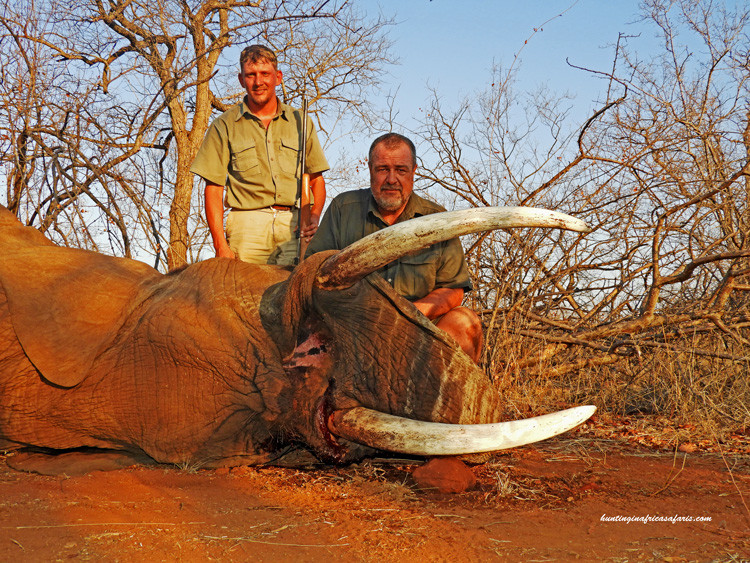
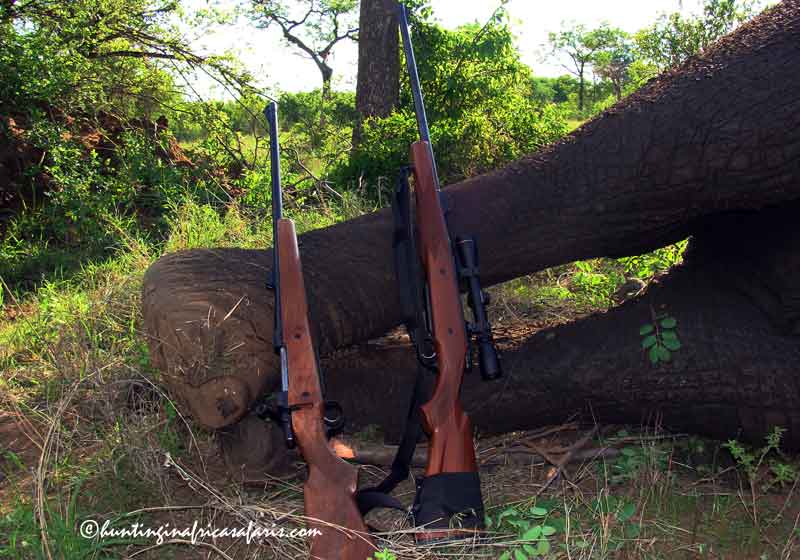
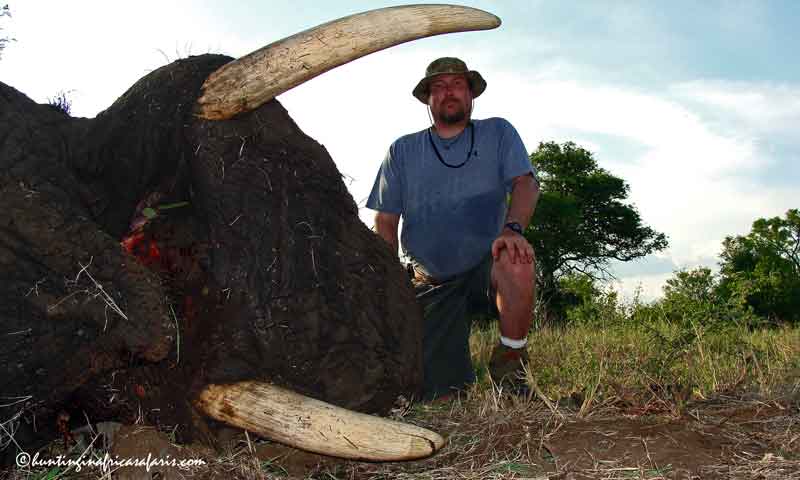
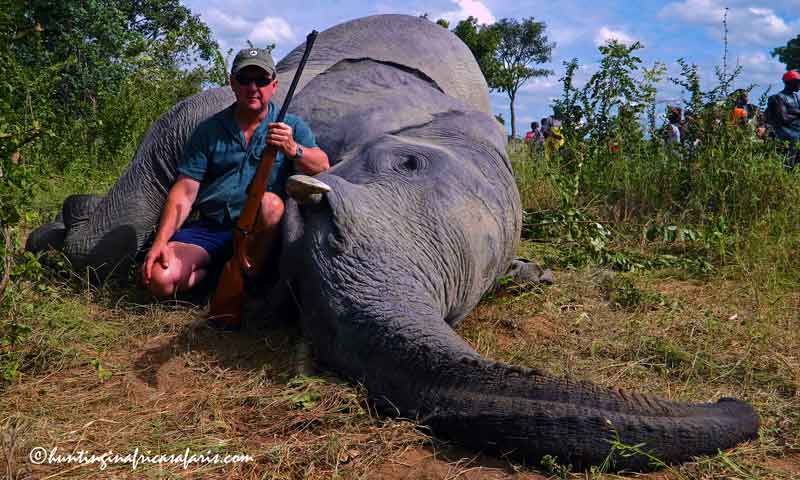
Experience the majesty and intensity of the African elephant (L. africana) safari. This gallery showcases the scope and scale of the hunt, from days spent tracking deep within the concession to the moment of triumph with a hard-earned bull. These images reflect our commitment to ethical hunting, conservation, and providing a safe, world-class dangerous game experience.



6. Gemsbok gallery: Kalahari and bushveld success
Witness the striking beauty and magnificent trophies of the gemsbok (Oryx gazella) harvested on safari across the diverse landscapes of South Africa. This gallery showcases the culmination of the fair-chase challenge, highlighting the dramatic black and white facial markings and impressive spear-like horns that define this desert icon.
Each image represents a successful hunt where patience, superior optics, and precise shot placement overcame the extreme resilience of the oryx. From the red sands of the Kalahari to the dense thickets of our specialized concessions, these trophies stand as a testament to the reward of pursuing the ultimate desert plains game challenge.
PH Field Note on Photography: When posing with your harvested trophy in the field, our team takes immense care with lighting, positioning, and cleaning to ensure your photographs reflect absolute respect for the animal and mirror the true, rugged spirit of your South African safari experience.
Services
Contact
hunt@huntinginafricasafaris.com
+27 82 824 7681
on Whatsapp and Telegram
Hours
Mondays from: 06:00 - 20:00 (6 am - 8 pm)
Tuesday - Saturday from: 06:00 - 20:00 (6 am - 8 pm)
Sunday: Closed unless we are hunting.