

Red lechwe hunting in South Africa: An absolute guide
The Red lechwe (Kobus leche) is a specialized, medium-sized antelope that serves as the ultimate test for the walk-and-stalk hunter. While historically water-dependent, today the premier populations are managed across the diverse, drier terrain of the Free State, the Kalahari, Mpumalanga, and Limpopo. Their striking reddish-brown coat and elongated hindquarters provide incredible agility, allowing mature rams to move across the open grasslands and savanna with a speed that routinely challenges inexperienced hunters.
For the international sportsman researching red lechwe hunting in South Africa, this striking species is a highly sought-after addition to any classic plains game safari. Because they thrive in these specialized dry-veld regions, securing a world-class ram requires patience, sharp optics, and precise long-range rifle skills rather than specialized marsh gear.
This guide moves past the marketing fluff to provide the technical expertise required for a successful safari. Whether you are budgeting for a standalone trip or looking to add this species to an existing itinerary, we break down the current red lechwe trophy fee in South Africa, ethical fair-chase practices, and the field mechanics necessary to secure a representative trophy ram.
2. Red lechwe hunting prices and details 2026
Below are the official 2026 red lechwe hunting south africa price details and trophy fees. To assist with your safari budgeting and maintain absolute price transparency, we have frozen our standard rates for the current season. Furthermore, if you choose to add this iconic species to any existing plains game itinerary, you can take advantage of our exclusive 2026 add-on incentive.
| 2026 Red Lechwe Trophy Investment Rates | |
|---|---|
| Standard trophy fee |
2026 Rate: $3,000 USD Policy: Frozen baseline rate for the 2026 season; payable only upon successful harvest or confirmed field wounding. |
| 2026 Add-on special |
2026 Rate: $2,700 USD (Save 10%) Policy: Incentive rate valid strictly when added to an existing, confirmed 2026 plains game package. |
| Safari accommodation | Includes fully integrated stays at luxury, Department of Economic Development, Environment, Conservation and Tourism (DEDECT) approved hunting lodges. |
2.1 Essential pricing and tax information
- All-inclusive safari experience: Daily rates cover your professional hunter, a dedicated tracking and skinning team, luxury accommodations, all meals, and local beverages. From the moment of airport pickup until departure, the focus remains entirely on the field.
- 15% VAT exemption: Under South African law, the 15% Value Added Tax is not payable on the red lechwe trophy fee south africa requirements, provided the trophy is exported by a registered taxidermy agent. This tax-free status represents a significant saving for international sportsmen. Please note that the 15% VAT remains applicable only to the daily rates (the domestic service portion of the safari) as per government regulations.
3. Best caliber for red lechwe hunting in South Africa
Selecting the correct rifle configuration for the Red lechwe (Kobus leche) requires a balance of flat trajectory and structural bullet integrity. While they are classified as a medium-sized antelope, mature rams are remarkably tough and possess a high resistance to initial bullet shock. On the wide, open plains and dry savanna concessions of South Africa, shots are frequently taken at extended distances where crosswinds come into play.
Based on nearly three decades of professional outfitting experience and precise field ballistics, choosing the right cartridge ensures a clean, ethical harvest. The goal is complete energy transfer to the vitals, anchoring the animal instantly on the dry grasslands of the Free State or the open bushveld of Limpopo, eliminating any need for a prolonged tracking job.
| Red Lechwe Ballistic Performance Specifications | |
|---|---|
| Minimum caliber baseline | Recommended Cartridge Setup: .270 Winchester (Utilizing 150gr premium controlled-expansion bullets) |
| Versatile bushveld standards | Recommended Cartridge Setup: .308 Winchester or .30-06 Springfield (Loaded with 180gr premium bonded configurations) |
| Precision precision rifle cartridges | Recommended Cartridge Setup: 7mm PRC or .300 PRC (Engineered for modern high-ballistic coefficient factory loads) |
| Long-range reach magnums | Recommended Cartridge Setup: .300 Winchester Magnum or .300 Weatherby Magnum (Ideal for cross-valley wind stability) |
| Heavy bushveld authority | Recommended Cartridge Setup: .375 H&H Magnum or 9.3x62mm Mauser (Deploying 250gr to 300gr soft-points for maximum energy transfer) |
3. Choose your red lechwe hunting caliber wisely
Selecting the correct rifle configuration for the Red lechwe (Kobus leche) requires a balance of flat trajectory and structural bullet integrity. While they are classified as a medium-sized antelope, mature rams are remarkably tough and possess a high resistance to initial bullet shock. On the wide, open plains and dry savanna concessions of South Africa, shots are frequently taken at extended distances where crosswinds come into play.
Based on nearly three decades of professional outfitting experience and precise field ballistics, choosing the right cartridge ensures a clean, ethical harvest. The goal is complete energy transfer to the vitals, anchoring the animal instantly on the dry grasslands of the Free State or the open bushveld of Limpopo, eliminating any need for a prolonged tracking job.
| Red lechwe ballistic performance specifications | |
|---|---|
| Minimum caliber baseline | Recommended Cartridge Setup: .270 Winchester or 6.5 Creedmoor (Utilizing 130gr to 143gr premium controlled-expansion bullets for flat-shooting precision) |
| Modern long-range specialists | Recommended Cartridge Setup: 6.5 PRC or 7mm PRC (Engineered for high ballistic coefficient profiles to buck open-pan crosswinds flawlessly) |
| Versatile all-rounders | Recommended Cartridge Setup: .308 Winchester or .30-06 Springfield (Loaded with 165gr to 180gr premium bonded configurations for a definitive plains game anchor) |
| Heavy-hitters maximum insurance | Recommended Cartridge Setup: .300 Winchester Magnum or .300 PRC (Deploying 180gr to 210gr heavy match or bonded bullets to drop a mature ram instantly before he reaches deep water) |
3.2 The PRC Advantage for the long-range shots
For 2026, we are seeing an increasing number of US clients arriving with the PRC family. These cartridges are particularly effective for the "swamp specialist" for several reasons:
-
6.5 PRC: The perfect "step up" from the Creedmoor.
It provides the extra velocity needed to buck the wind across open pans while maintaining manageable recoil for precise placement. -
7mm PRC: Currently the "sweet spot" for African plains game.
It carries significantly more energy than the 6.5 variants, making it ideal if your lechwe hunt is part of a larger package including Kudu or Blue wildebeest. -
300 PRC: While a heavy hitter for a lechwe ram, it offers unmatched stability for the long-range specialist.
If you are comfortable with the recoil, it provides absolute "anchoring" power in wet terrain.
3.3 PH technical notes on ballistics
For the Red lechwe, we recommend Premium Bonded bullets or Monolithic solids like the Barnes TTSX. Because these rams are often hunted in open floodplains where shots may exceed 200 yards, a caliber with a flat trajectory and high sectional density is preferred. The goal is a bullet that can withstand the initial impact and drive through the vitals, even if the ram is quartering-on in heavy cover or shallow water.
3.4 Where to hunt Red lechwe in South Africa
The Red lechwe is not found in every province. To ensure a world-class trophy, we focus our efforts in the Free State and the North West Province. These regions offer the expansive, well-managed hunting ranches and wetland habitats where Kobus leche reaches its maximum horn potential. Hunting in these provinces allows us to offer traditional walk-and-stalk safaris.
3.3 Ballistic Requirements for Red lechwe
When selecting a cartridge and load combination for lechwe, three field realities must dictate your choice:
-
The Drop-and-Anchor Necessity: A bullet must carry enough hydraulic shock and structural integrity to break major bone or collapse the vitals instantly, preventing the ram from escaping into knee-deep water or thick reeds.
-
Wind Drifting Across Open Pans: Floodplains offer zero wind protection. High Ballistic Coefficient (BC) bullets are vital to resist horizontal deflection at extended ranges.
3.4 Where to hunt Red lechwe in South Africa
The Red lechwe is not found in every province. To ensure a world-class trophy, we focus our efforts in the Free State and the North West Province. These regions offer the expansive, well-managed floodplains and wetland habitats where Kobus leche reaches its maximum horn potential. Hunting in these provinces allows us to offer traditional walk-and-stalk safaris in the true "swamp specialist" habitat.
4. Red lechwe shot placement: technical field guide
For an ethical, clean harvest on a Red lechwe ram, placement is paramount. Unlike standard plains game, the lechwe’s aquatic adaptations mean they are often standing in water or thick reeds, which can obscure the lower third of the body. Precision is required to ensure a "drop-and-anchor" result.

4.1 Targeting points
-
The Vitals: Aim for the lower third of the body, directly in line with the back of the front leg. This targets the center of the heart and the dense cluster of the lungs.
-
Broadside (The Gold Standard): This offers the largest margin for error. Visualize a horizontal line one-third of the way up the torso and a vertical line following the front leg; your point of impact is the intersection.
-
Quartering-Away: This is a highly effective angle for the lechwe. Target the exit point on the far shoulder to ensure the bullet travels diagonally through the heart-lung vault.
-
The Marsh Factor: Be aware that if a ram is standing in water, his "bottom third" is partially submerged. You must adjust your aim to ensure you aren't hitting the water surface, which can cause bullet deflection or a low miss.
4.2 PH field notes: what to avoid
-
The Shoulder Bone: While modern calibers like the .300 PRC can punch through, avoid the heavy bone of the shoulder to prevent unnecessary meat damage and potential deflection.
-
Head and Neck Shots: We strictly discourage these. The Red lechwe is a high-movement species; the target is too small and the risk of a non-lethal, wounding jaw-shot is too high.
-
High Hits: Due to the lechwe’s unique anatomy where the back slopes downward toward the neck, hunters often shoot too high. Aim small, miss small—stay in that bottom third.
5. Species biology and conservation (Kobus leche)
The Red lechwe is a medium-sized, semi-aquatic antelope that occupies a unique ecological niche in southern Africa. While smaller than a Nyala, the distinction between the sexes follows the traditional regional terminology of smaller African antelope: Rams carry the impressive, heavily ridged, lyre-shaped horns, while the Ewes are completely hornless and generally smaller in stature.
5.1 Anatomical adaptations
The physical build of a Red lechwe ram highlights its evolutionary adaptation to a marshland environment. Their rear legs are proportionally longer than those of traditional bushveld plains game, meaning they stand noticeably higher at the rump. This pitched forward anatomy allows the lechwe to bound effortlessly through water and deep mud.
They possess elongated, widely splaying hooves and highly flexible dewclaws that distribute their weight across soft mud, preventing them from bogging down where other antelope would easily sink. Additionally, their rough, bright chestnut coat is saturated with a specialized natural oil that acts as a waterproof barrier, preventing waterlogging and protecting their core body temperature during extended periods in freezing floodplain waters.
5.2 Conservation through sustainable use
In South Africa, the biological proliferation of the Red lechwe stands as a premier example of wildlife conservation fueled by private enterprise. While historically native to the more tropical wetlands of Zambia, Botswana, and the Caprivi Strip, thriving populations have been established across the managed wetlands, river margins, and seasonal pans of private game reserves in provinces like the Free State and Limpopo.
By assigning a tangible value to mature rams through highly regulated trophy hunting, landowners are financially incentivized to restore, fence, and protect delicate wetland habitats from agricultural degradation. Current 2026 wildlife management models prioritize the selective off-take of post-prime rams that have already passed on their genetics. This selective harvesting strategy preserves the primary breeding structure, reduces territorial pressure on the younger rams, and ensures the long-term health of the wild ewe herds.
| Red lechwe hunting and biology specifications | |
|---|---|
| Scientific name | Kobus leche (Belonging to the taxonomic tribe Reduncini, closely related to waterbuck and puku varieties) |
| Preferred habitat | Open floodplains, marshlands, seasonal pans, and well-watered alluvial grasslands across the Free State and Limpopo provinces |
| Best time of year to hunt | April to September (The dry winter season provides firmer footing along the marsh margins and clearer visibility across open terrain) |
| Average shot distance | 150 to 300 yards (Due to the vast, open nature of the floodplains, flat-shooting cartridges are highly advantageous) |
| Trophy quality metrics | Mature males feature thick, lyre-shaped horns that sweep dramatically backward before curving gracefully forward at the tips |
6. Red lechwe trophy hunting gallery: South Africa success stories
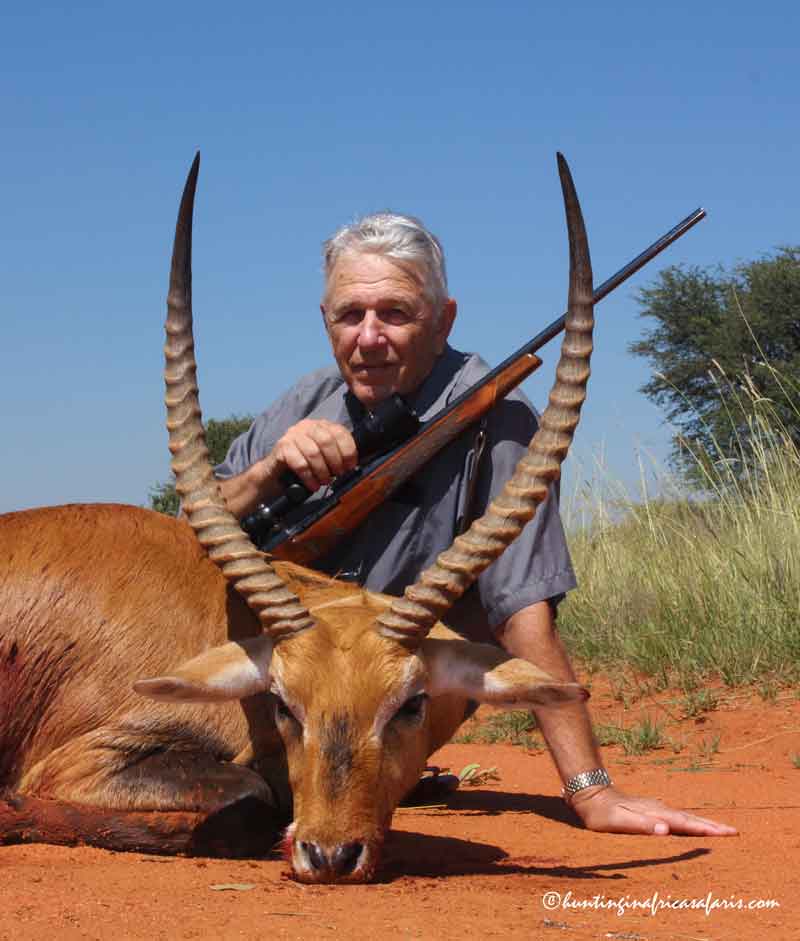
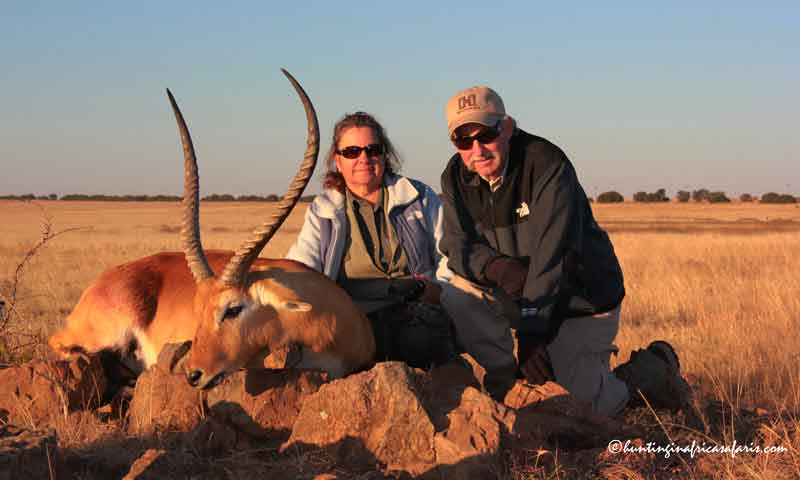
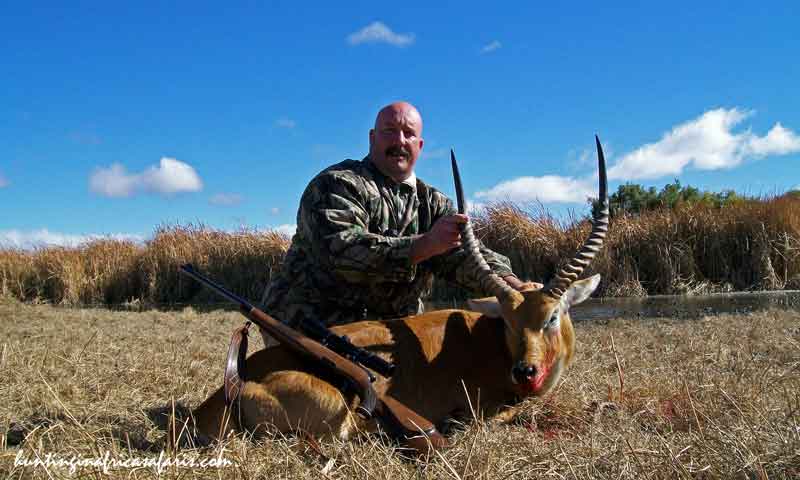
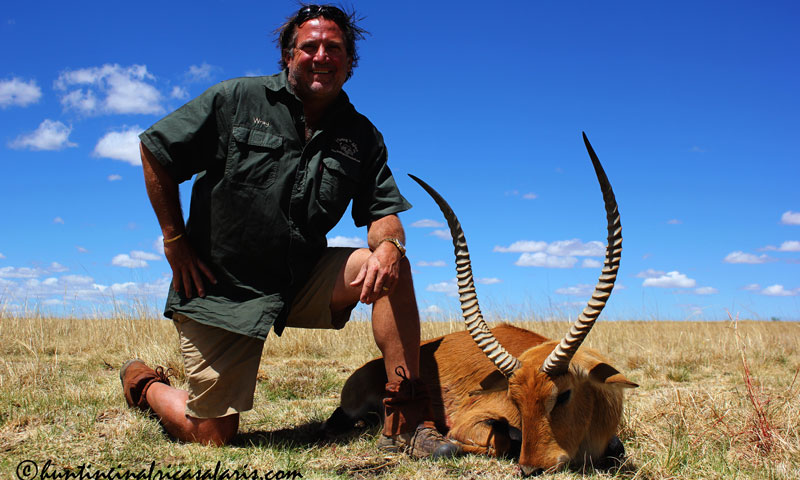
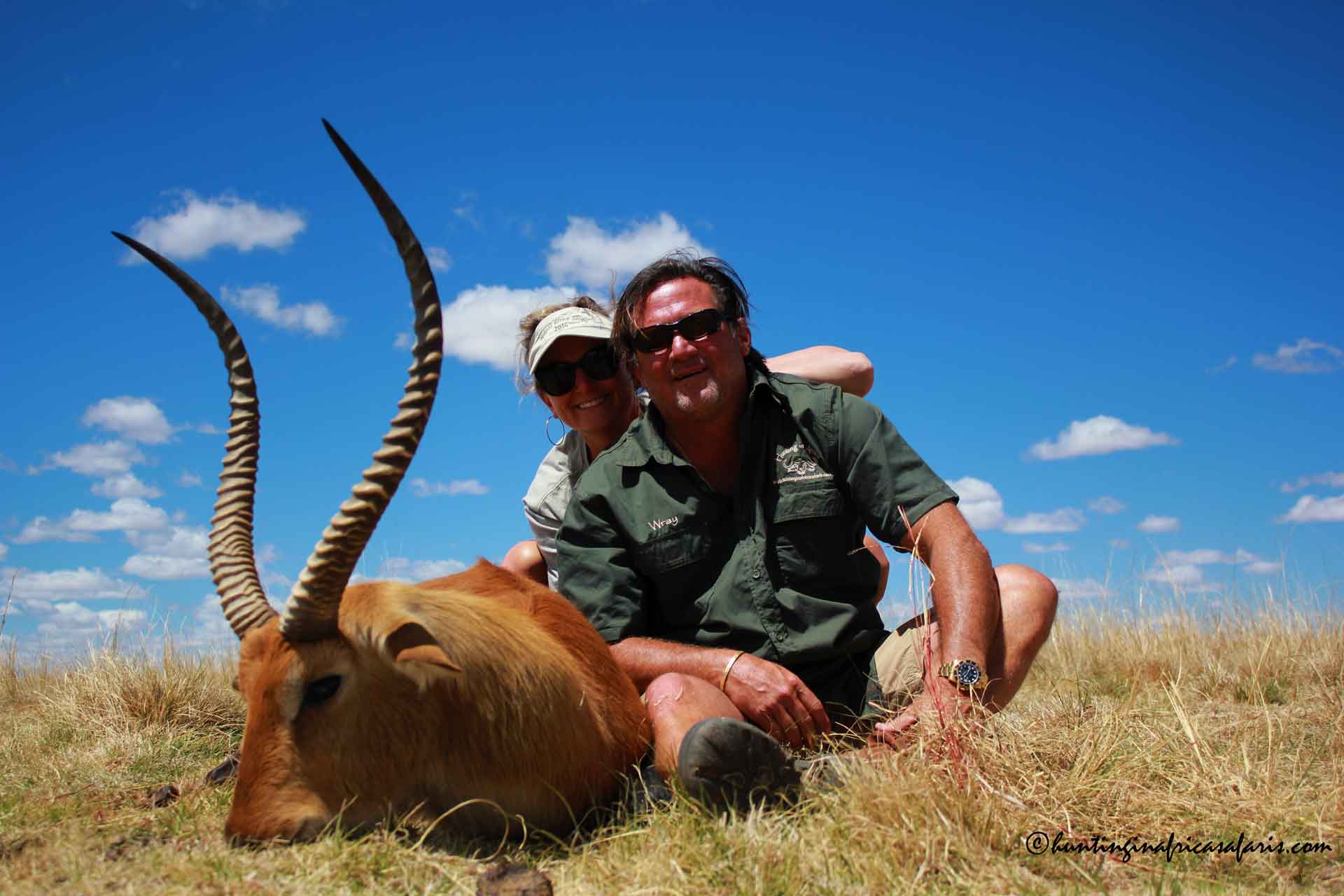
Browse our curated field gallery of successful Red lechwe hunts, showcasing top-tier, mature rams harvested across our primary hunting areas. These high-resolution hunting photos illustrate the definitive visual characteristics of prime trophy selection: the vibrant, water-repellent reddish-brown coats, dark shoulder markings, and the long, heavily ringed, lyre-shaped horns that define an exceptional Kobus leche ram.
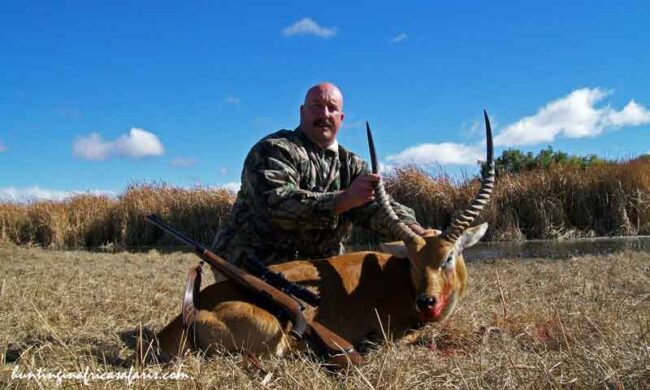
Every image in our hunting archive captures a meticulously planned walk-and-stalk safari through the challenging wetland habitats, river margins, and expansive floodplains of the Free State, Limpopo, and North West Province. These documented success stories provide real-world proof of what disciplined spotting, expert tracking, and correct ballistic execution can achieve in the field.
For international sports hunters evaluating a safari outfitter, this gallery represents a record of world-class trophy quality and ethical, fair-chase hunting standards. From long-range glassing across open alluvial pans to the physical demands of a marsh recovery, these field photos represent the pinnacle of specialized plains game hunting packages in South Africa.


7. Frequently asked questions: Red lechwe hunting
Is the Red lechwe part of the spiral horn antelope family?
Technically, no. While their magnificent horns have a distinct spiral structure and a lyre-shaped arc, the Red lechwe belongs to the Reduncinae subfamily (along with Waterbuck and Reedbuck), not the Tragelaphini (Kudu, Nyala, Eland). However, due to their impressive horn length and beauty, many US hunters include them in a "Spiral Horn Safari" package.
Can I export my Red lechwe trophy to the USA?
Yes. The Red lechwe is not listed on the CITES Appendix I, and currently, there are no USFWS import bans on this species from South Africa. We coordinate directly with our preferred clearing agents and taxidermists to ensure your trophy is treated, permitted, and shipped safely to your home or office.
What is the best time of year to hunt Red lechwe?
While we hunt year-round, the April to August window is ideal. During this time, the South African winter keeps the temperatures in the Free State and North West provinces manageable for the strenuous walk-and-stalks required in the wetlands.
Do I need special footwear for a lechwe hunt?
No. In South Africa, mostly Red lechwe are in drier areas. There are swaps and there are wetlands but we will let you know about the conditions before the hunt.
Is the Red lechwe a difficult animal to anchor?
The Red lechwe is remarkably tough for its size. Their "pitched-forward" anatomy means hunters often shoot too high. Following our two-dot shot placement guide is essential to anchor the ram quickly and prevent a long recovery in difficult, wet terrain.
Services
Contact
hunt@huntinginafricasafaris.com
+27 82 824 7681
on Whatsapp and Telegram
Hours
Mondays from: 06:00 - 20:00 (6 am - 8 pm)
Tuesday - Saturday from: 06:00 - 20:00 (6 am - 8 pm)
Sunday: Closed unless we are hunting.